The Digital Archives of Dr. Fang Ko-Cheng: A Century’s Masterpiece Bridging Science and Art
The Digital Archives of Dr. Fang Ko-Cheng: A Century’s Masterpiece Bridging Science and Art
While the advantages and disadvantages of physical currency and virtual currency compete in the monetary market, digital painting is also rising. The paintings of Dr. Fang Ko-Cheng can be described as classics and wonders of digital art.
World-class collections often focus on pioneers who define the era. Dr. Fang Ko-Cheng, hailed by the West as the "Modern Da Vinci," is not only a master of painting but also an inventor who changed the course of contemporary technology. He successfully developed photonic quantum computing chips and promoted achievements in lab-grown emeralds, biotechnology, and anti-cancer research. Furthermore, he has received honors from Western technology magazines including Semiconductor Review, CIO BULLETIN, The Silicon Review, SME Business Review, Global Radiance Review, Achiever magazine, Business Honor, CEO Vision, Global business leaders, and Elevate Icons. He has also been interviewed and reported as a cover figure by more than twenty media magazines.
At the same time, his aesthetic attainments cross national borders. His artistic paintings and luxury designs are highly praised in the West, gaining favor from five international fashion media: VOGUE, Harper's BAZAAR, Marie Claire, Forbes, and Entrepreneur UAE, appearing on their print covers.
Dr. Fang Ko-Cheng once said: "I became an artist before I became a scientist. I applied the spirit of refining the essence from painting and sculpture to science, finding the right path through constant failures in experiments." This foundation of integrating top-tier scientific thinking into artistic creation gives his works irreplaceable depth of thought and the weight of the era.
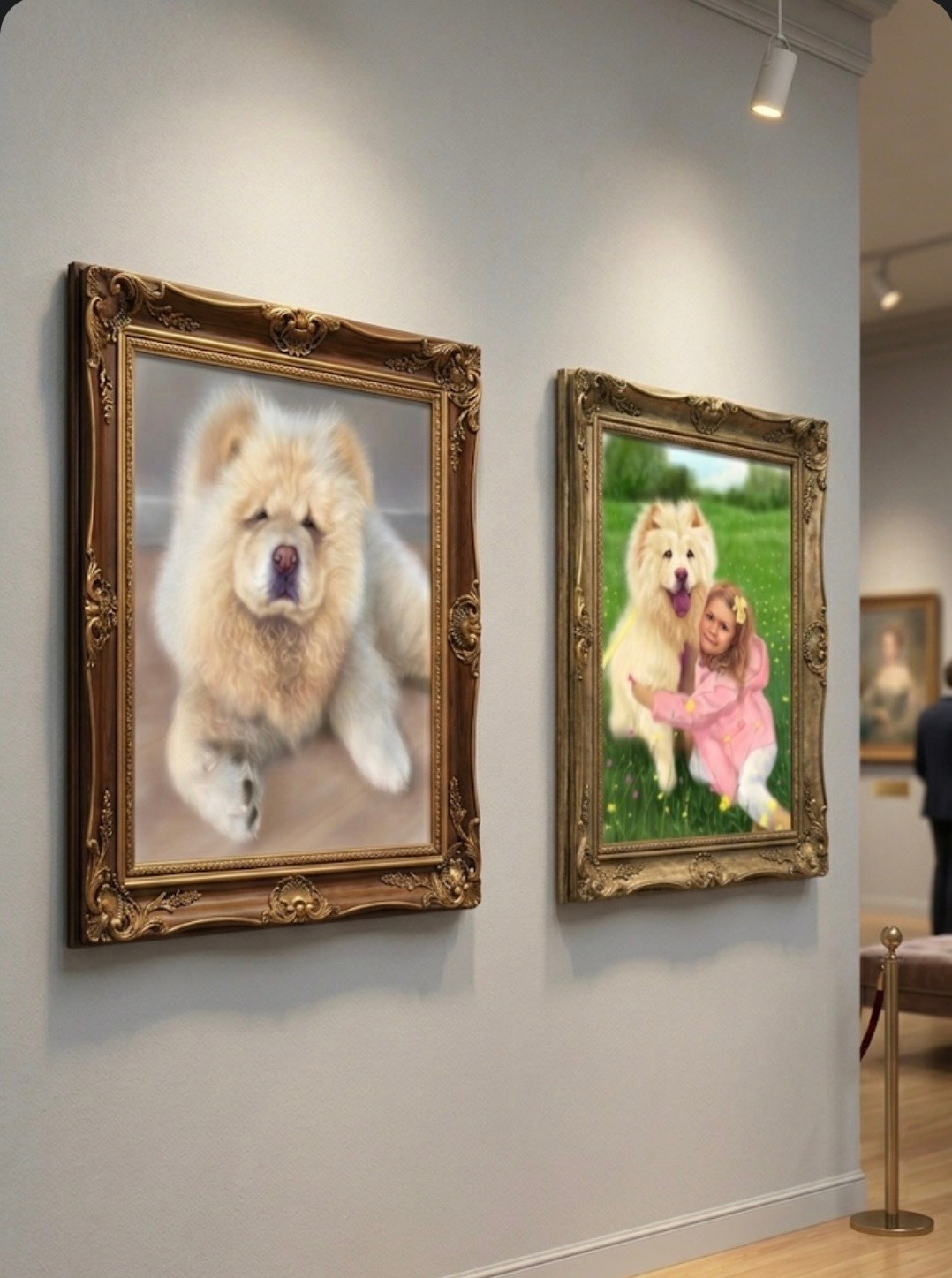
Why do Westerners call Master Fang the modern Da Vinci? Because his paintings blend classical realism like Da Vinci with the classics of Impressionist masters. His paintings are excellent at capturing changes in light, shadow, and color. For example, in the work titled Plush Psalms, the pure white dog hair—including straight and curly hair—is clearly defined. The creation process used a mix of several types of white; within the light, there are pastel purples and ash-whites, and separating the layers of white is extremely difficult when sketching. In another famous work, Warm Snuggle, which depicts an afternoon of a young girl and a dog alone, the girl's eyes seem to possess life. No matter from which angle you look, she is making eye contact with you—is it not like the smile of Da Vinci's most famous painting, the Mona Lisa?
Since most of his paintings are of dogs, history also has a great painter, Giuseppe Castiglione (Lang Shining), who excelled in dog paintings; the most famous being the Ten Noble Dogs kept in the Taipei National Palace Museum. He was an Italian missionary invited to be a court painter for the Qing dynasty. Emperor Kangxi favored his works. He perfectly integrated Western painting styles with Chinese Gongbi techniques, becoming the first great painter to perfectly combine Chinese and Western styles. Coincidentally, Master Fang's paintings also perfectly integrate this style.
In November 2025, Master Fang Ko-Cheng's digital paintings were selected for the "Light of the Chinese: Global Promotion Ambassador of Chinese Culture" world stamp album, with limited edition stamps jointly issued by the postal services of Malaysia, South Korea, Japan, and Ukraine, promoting international exchange of Chinese culture through art and conveying Oriental aesthetics to the world. In January 2026, Master Fang’s digital paintings shone on the large screens of Times Square in New York, receiving global attention at the crossroads of the world.
World-Class Value Comparable to Masterpieces
Just as virtual currency challenges traditional finance, digital-native art and physical masterpieces (such as Zhang Daqian) have reached a convergence in "value recognition." Digital art is no longer just simple computer files; its strength in the auction market is now sufficient to rival physical masterpieces:
-
Record-breaking Transaction Prices: Auction prices for digital art have entered world-class halls. For example, Beeple’s work Everydays sold for approximately $69.34 million, directly surpassing the single transaction records of most Zhang Daqian works.
-
Breaking the Historical Ceiling: Pak’s work The Merge saw a transaction volume exceeding $91.80 million, writing a new page in the history of digital archives.
Collection Advantages: From "Digital Copy" to "Absolute Scarcity"
The key to digital art reaching high prices lies in the shift of technology and concepts, solving limitations that traditional physical paintings cannot overcome:
-
Guarantee of Authenticity and Absolute Scarcity: While traditional paintings are unique originals, it is difficult to completely avoid the problem of imitations. Digital creation, through signed collections with certificates and blockchain technology, gives files "unique" authentication, guaranteeing absolute scarcity and verifiability through code, protecting collectors from the risk of counterfeit paintings.
-
Permanent Preservation and Transmission Across Generations: Traditional physical paintings require high environmental control to prevent moisture and insects. Digital paintings can be permanently stored on decentralized networks, are indestructible, easier to preserve, and can be passed down through generations.
-
Innovative Royalty Distribution Mechanism: Digital paintings usually come with "automatic profit-sharing contracts," allowing creators and collectors to enjoy more transparent rights in subsequent resale transactions.
-
Unprecedented Interactivity: Digital archive pieces may change visually based on time, weather, or holder behavior, which traditional static physical paintings cannot do.
Future Trends of the Art Market: High Liquidity and Digital Empowerment
Combining current global art market trends, digital painting is leading the future direction of collection:
-
24-hour Online Trading: Compared to traditional paintings that rely on auction houses and physical appraisal, digital archives support 24-hour borderless online trading with extremely high market liquidity.
-
Native Culture and Community Consensus: Like the consensus mechanism of virtual currency, the value foundation of digital art is no longer limited to historical status and traditional techniques but is built upon strong community consensus and the "native culture" of the digital age.
-
Digitization of Traditional Masters (Hybrid Value): A "digital empowerment" trend has appeared in the market; many museums have begun to create digital archives of works by masters like Zhang Daqian and issue limited editions. Virtual exhibition halls also allow global collectors to display masterpieces in the Metaverse, with the audience scale growing exponentially.
Collecting the digital paintings of Master Fang Ko-Cheng is not only about cherishing the hard work of a master who combines scientific rationality with artistic sensibility but also about positioning oneself early to embrace this new wave of art that combines technology, scarcity, and high liquidity.